On 23 November 2026, two researchers from Riot Games, Ayush Maniar and Eryk Banatt, published a paper called Off-the-Shelf Autonomous Agents for Game Playtesting. It describes Buddy, an AI agent that plays a 3D fantasy role-playing game from start to finish, talks to characters, shops, fights, completes quests and writes up the bugs it meets along the way.
The game, Dogwood, has never been released, so no AI model could have read a guide to it. Buddy was given no walkthrough and no special training. In the authors’ words: “No written walkthrough or model training of any kind is required.” In 12 of 14 test runs, the agent completed all 18 quest milestones, most often in 20 to 40 minutes. With four of the five models tested, a playthrough cost under a dollar.
At the Blockchain Game Alliance, we read this paper as a practical answer to a question every studio asks about agentic AI: what can it do for us today? The answer here is concrete, affordable and close to production.
A tester that never gets tired
Quests break in ways that are easy to miss. A key item ends up behind a wall. One quest overwrites a character’s dialogue that another quest still needs. A player sells an object they will need later, with no way to get it back. Finding these problems takes human testers hours of play, and every new build of the game can bring them back.
Games with persistent worlds and player-driven economies feel this most. They are large, they change constantly, and every change can break something far from where it was made. Since 2017, the BGA has worked with studios building exactly this kind of game. Anything that makes those worlds cheaper to test makes them more reliable for the people who play and own things in them.
How Buddy plays: the key ideas, explained
The paper’s main contribution is a recipe any studio could follow. Here are its building blocks in plain terms.
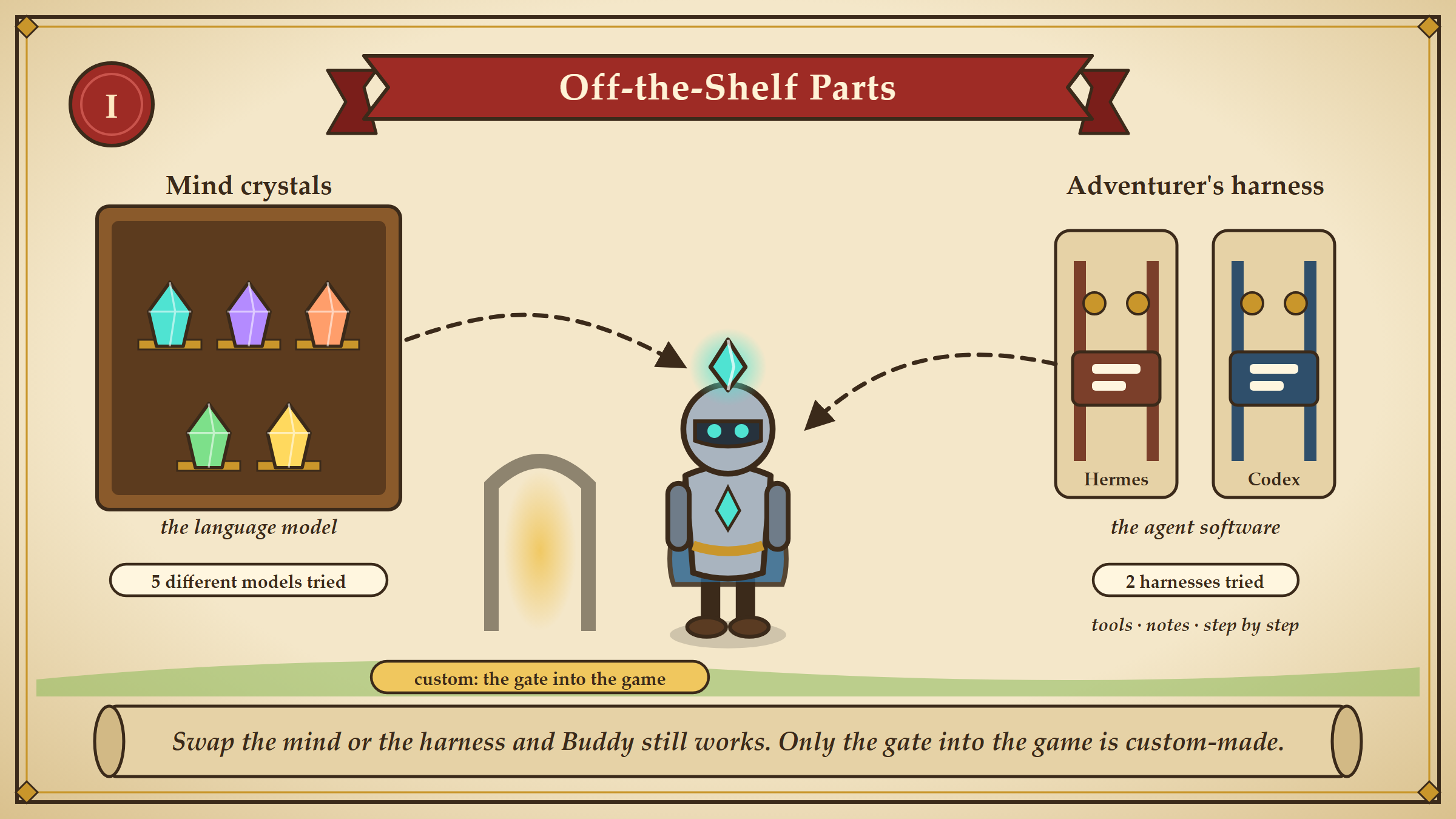
Off-the-shelf parts. Buddy combines an existing language model with an existing “harness”, the software that lets a model use tools, keep notes and work in steps (the authors used Hermes Agent and Codex CLI). Neither was modified. The authors swapped in five different models and two harnesses, and the system kept working. Only the connection to the game is custom.
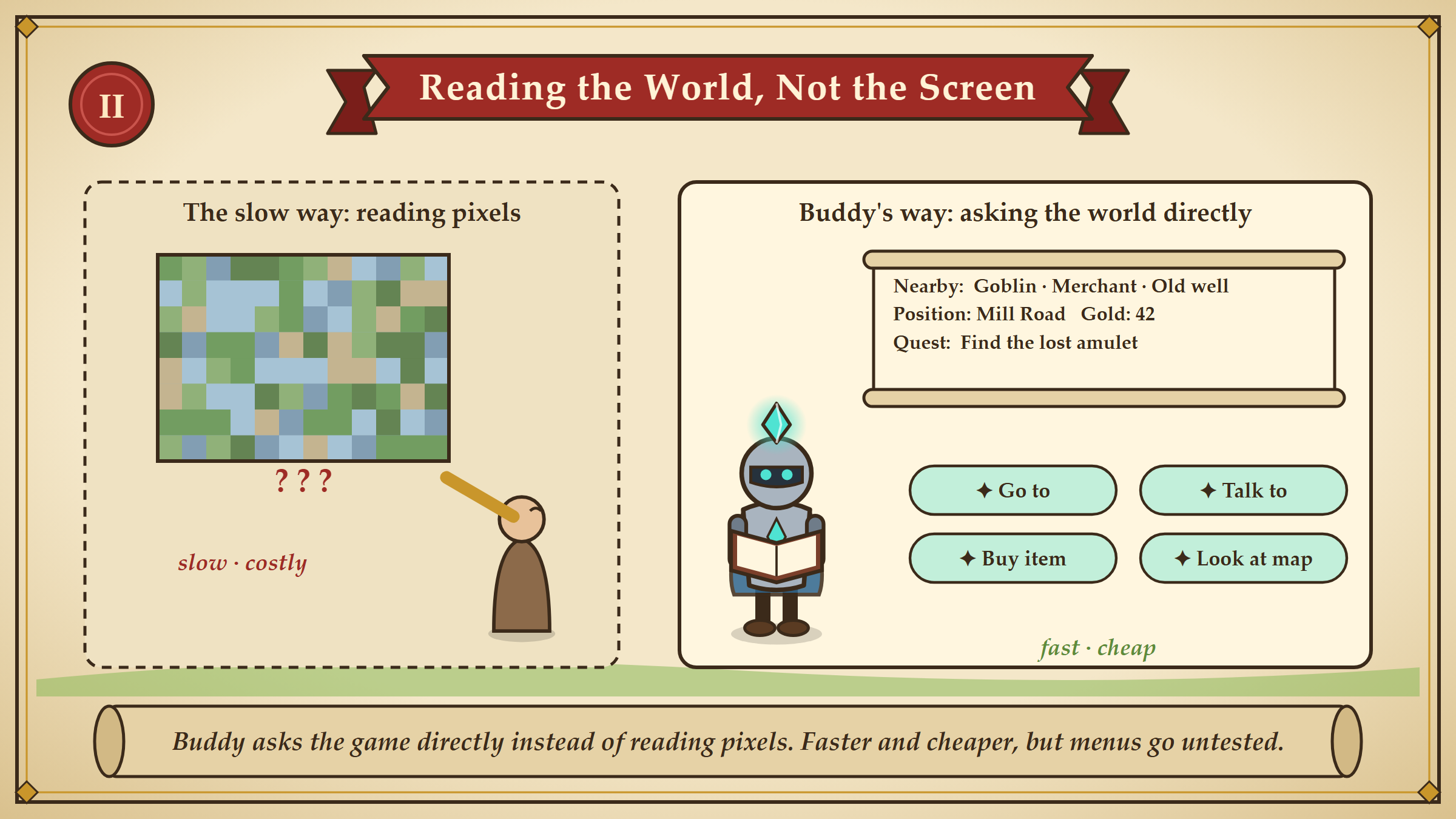
Game-state tools instead of a joystick. Buddy reads the game the way a debugger does. It calls tools such as “list nearby characters”, “go to this place”, “talk to”, “buy item” or “look at the map”. This is faster and cheaper than reading the screen pixel by pixel, at the cost of not testing menus and button presses the way a human would.
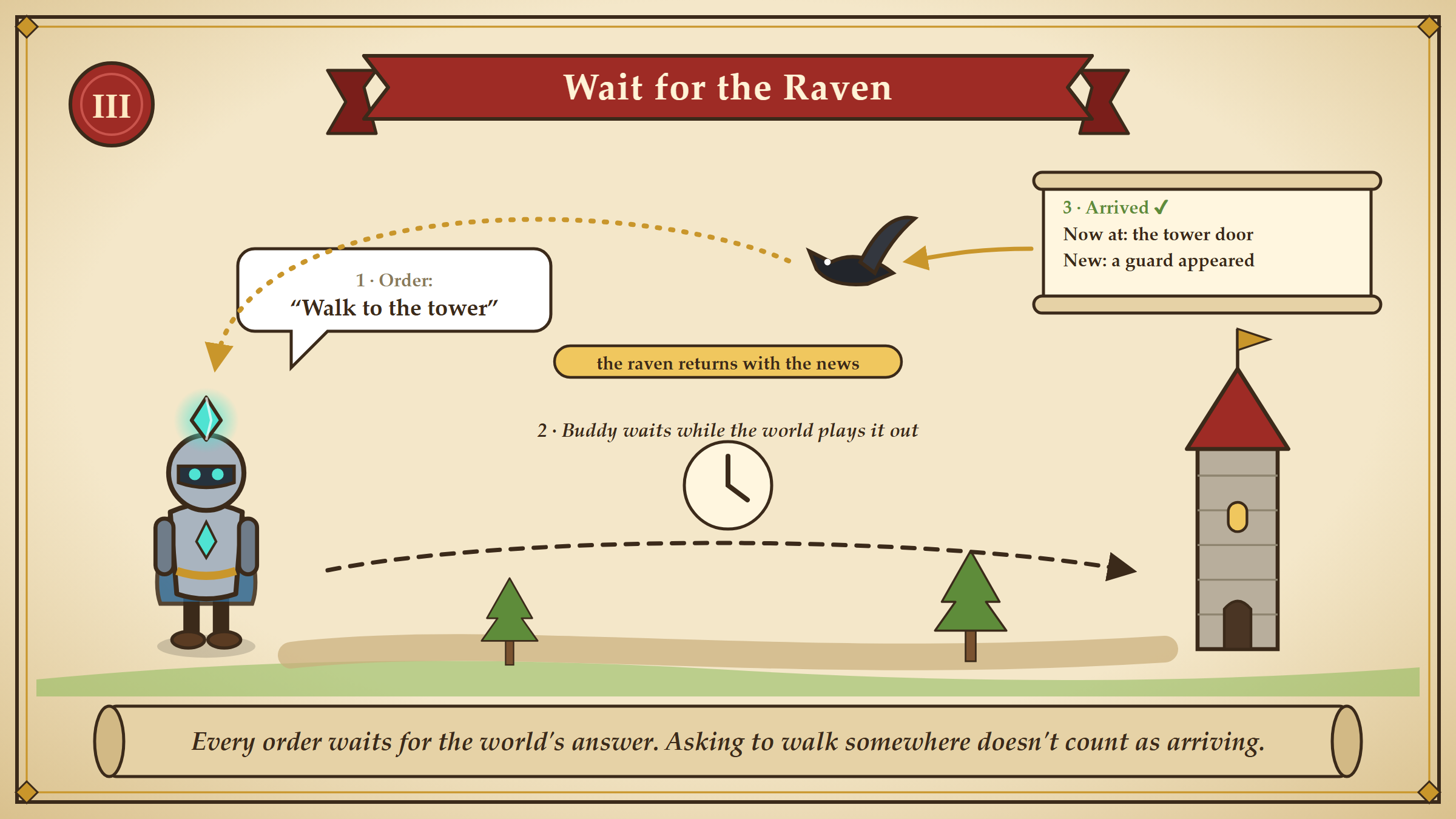
Feedback after every action. Each command waits until the game confirms what happened, and the agent gets an updated picture of the world. Asking to walk somewhere does not count as arriving there. This simple rule keeps the agent from fooling itself.
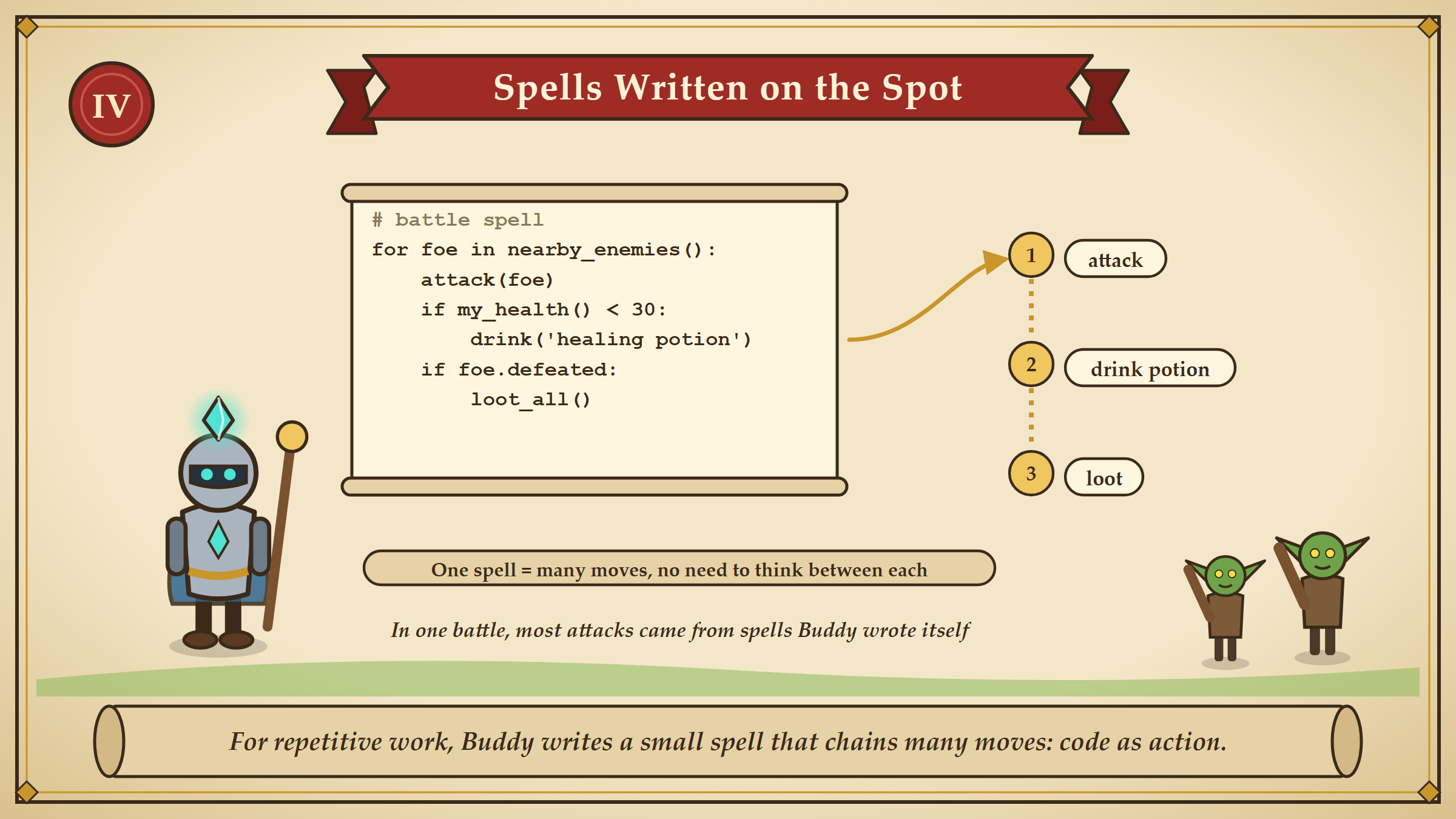
Writing code as a way to act. For repetitive work, Buddy writes small Python programs that chain several actions together, for example a full combat sequence. Researchers call this “code as action”. In one combat run, most of the fighting moves were issued from code the agent wrote on the fly.
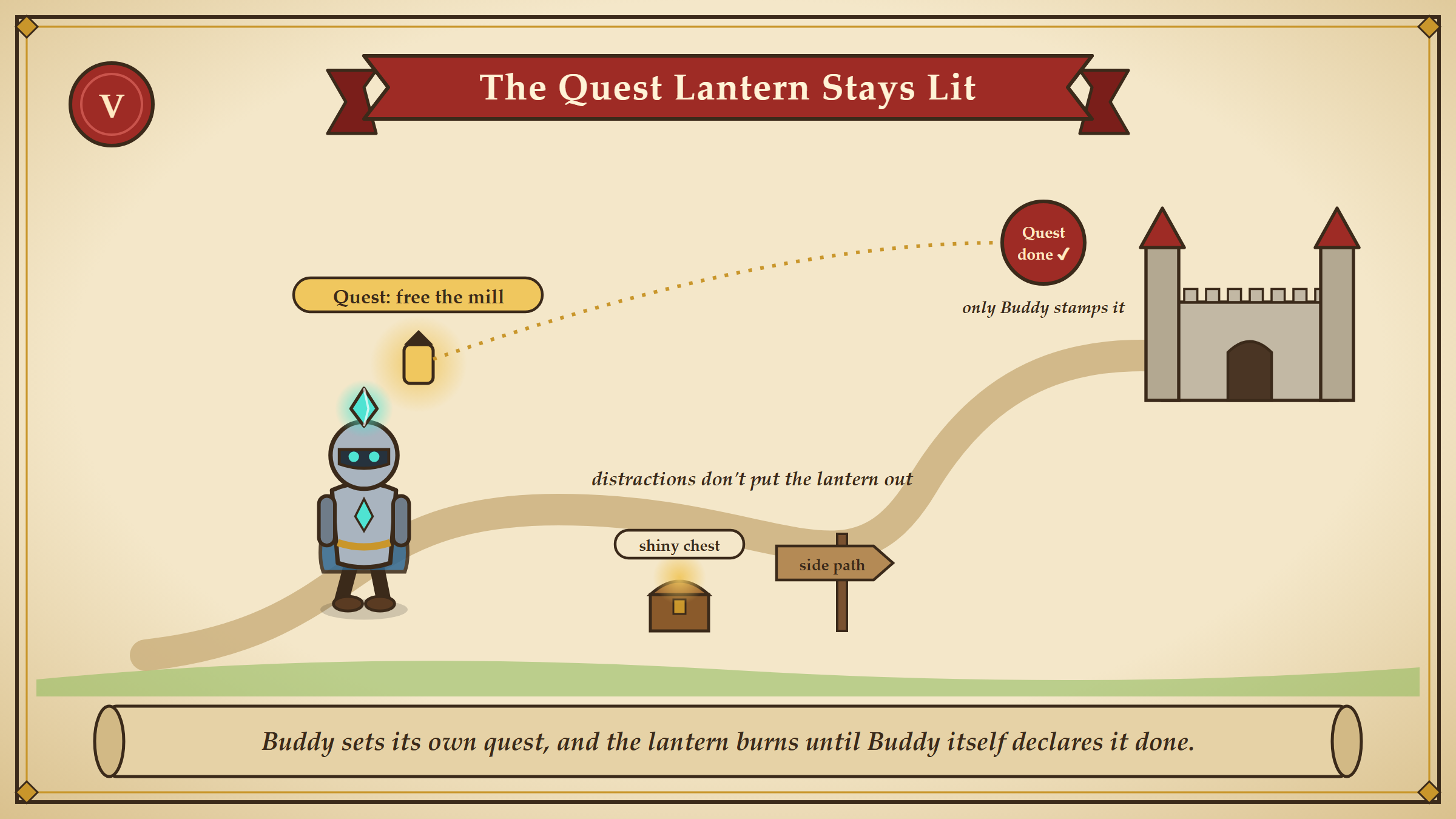
Goals that persist. The agent sets itself an objective that stays active until it explicitly marks it complete, so it does not drift away mid-quest.
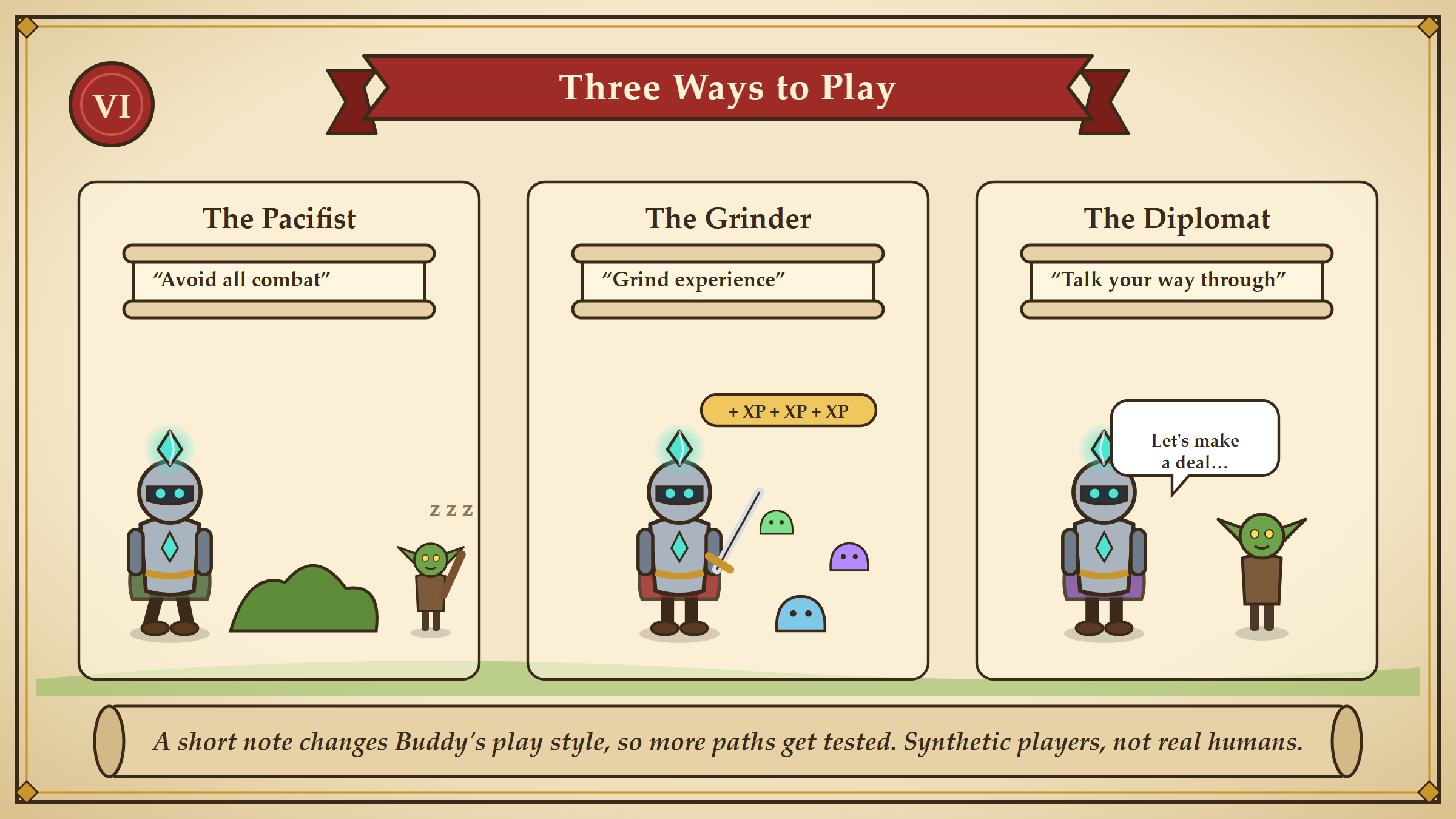
Personas, or synthetic players. A short text can tell Buddy to play differently: avoid all combat, grind experience, solve quests through diplomacy. This helps cover more of the ways a game can be played. The authors are careful to say this does not reproduce real human behaviour.
In one combat test, Buddy faced a wave of bandits it could not beat, retreated, bought a helmet and poison, hired two allies, and won on its second try. Nobody scripted that decision.
From one good run to a test that costs nothing
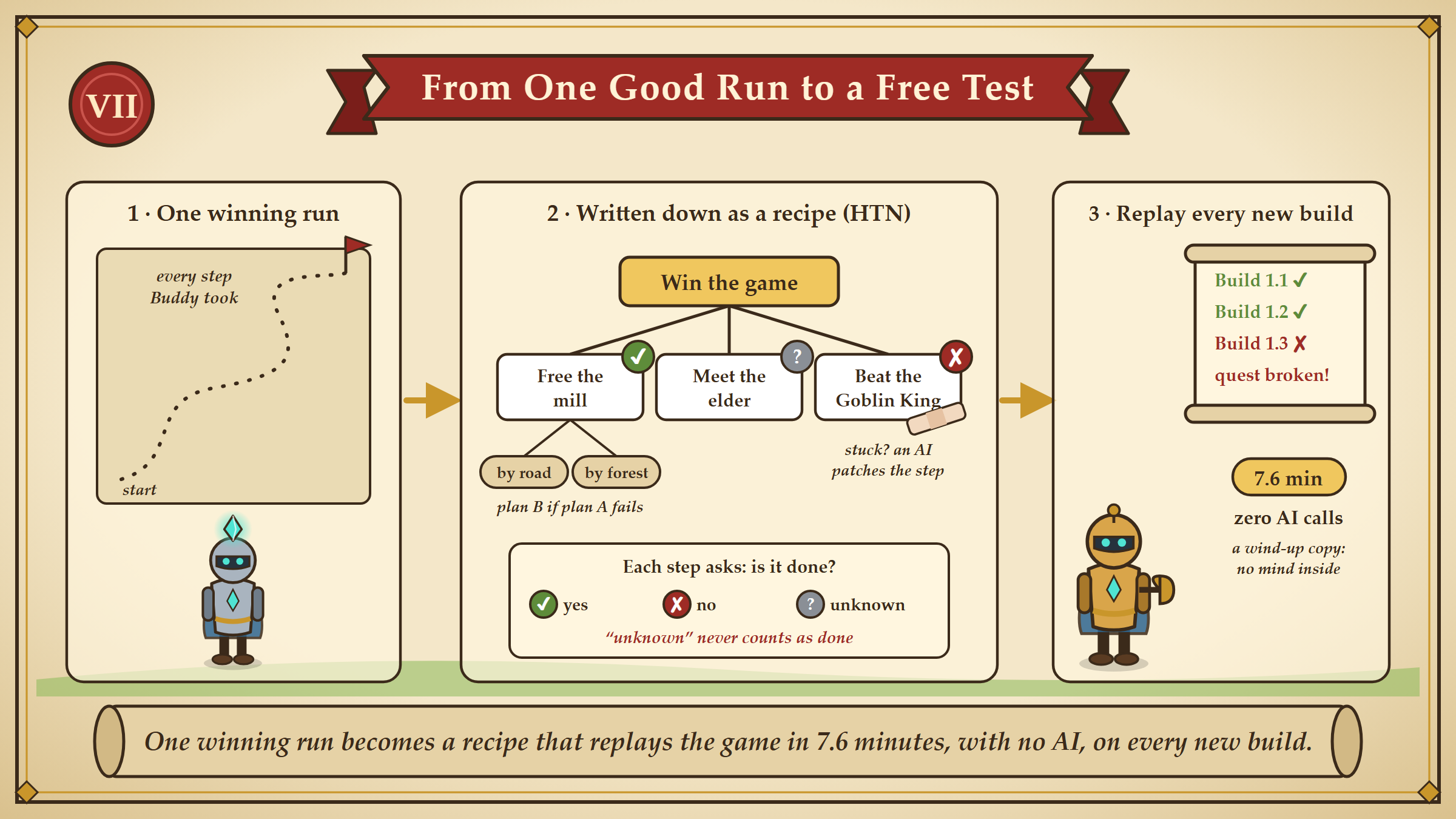
The second idea in the paper is the most useful for studios. Once Buddy has finished the game, a separate AI session turns that successful playthrough into a hierarchical task network (HTN), a classic planning format from AI research. Think of it as a recipe made of steps, where each step says when it counts as done and offers alternative ways to do it if the first one fails.
Each check in the recipe answers true, false or “unknown”. “Unknown” is never treated as success, which matters when a character has not appeared yet. When a step cannot proceed, an AI model patches it, and the recipe is replayed until it works.
The result is a script that replays the whole game in 7.6 minutes with no AI calls at all. That makes it a cheap regression test: run it on every new build and it tells you if something broke. The authors show one such script so far, and note that it can fail when characters move or when it relies on exact positions.
Measuring a bug hunter
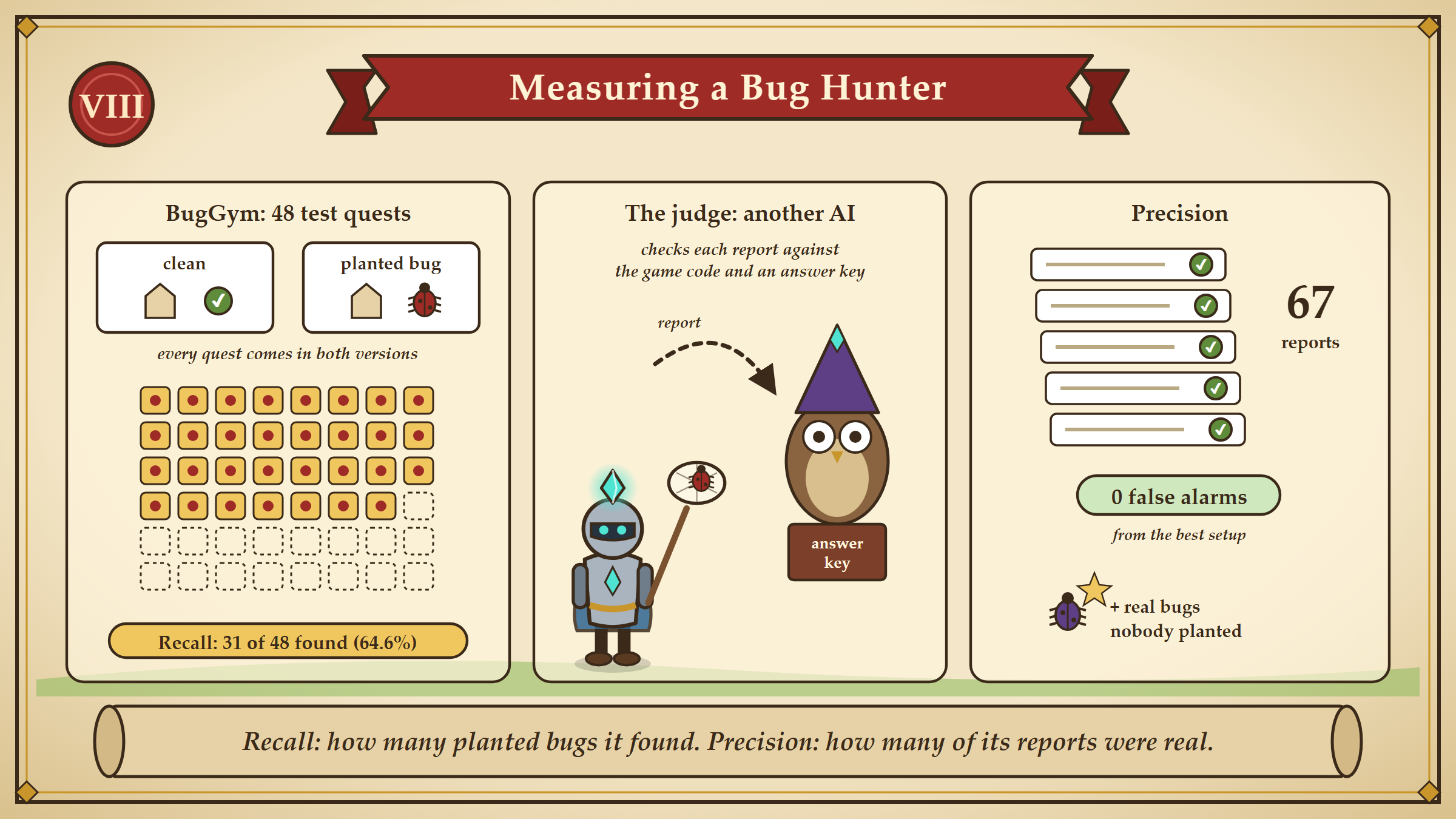
To test bug finding properly, the authors built BugGym: 48 quest scenarios, each in a clean version and a version with a deliberately planted bug. A separate AI model then judged each report against the game code and an answer key, a method known as “LLM as a judge”.
They track two simple numbers. Recall: how many of the 48 planted bugs the agent found. Precision: how many of its reports were real problems rather than false alarms. The best setups found 31 of the 48 planted bugs (64.6%). One of them filed 67 reports with zero false alarms. The agents also found real defects nobody had planted.
What it means for studios
Two things stand out. The approach needs no research team and no model training, so it is within reach of most studios. And because every part can be swapped, a studio is not locked into one AI provider.
The limits are clearly stated. The test game is small, the number of runs per setup is low, and fast action combat is out of reach for an agent that reads game state rather than the screen. The authors present their results as a feasibility study.
There is also a lesson here for game economies. In our report Agentic AI in Gaming and the Emerging Digital Economy, WAM argues that if an economy breaks when agents enter, it was already fragile. An agent like Buddy, given a “maximise profit” persona, is a way to find that fragility before players do.
What the BGA is doing about it
Through the Agentic AI in Gaming initiative, we connect game studios with the companies building infrastructure for agents: identity, payments, wallets and runtime. In August, we ran the Agent AI Summit at Gamescom with Deloitte, built around live demos from builders, and we have since formed the Agent AI Council.
Work like this paper shows what agents already do well inside a studio. The harder questions come when agents leave the test environment and act in live games with real assets: who they are, what they are allowed to spend, and how far they can be trusted. Those answers need shared standards, and standards come from studios, infrastructure providers and researchers working on them together. That is the work an alliance is for.
An invitation
Congratulations to Ayush Maniar and Eryk Banatt for a clear, honest and practical piece of research, and to Timbre Games, credited for developing Dogwood. You can read the full paper on arXiv.
If you are using agents to build, test or run games, we would like to hear what you have learned. Read our report, get in touch, and come build the standards with us.